
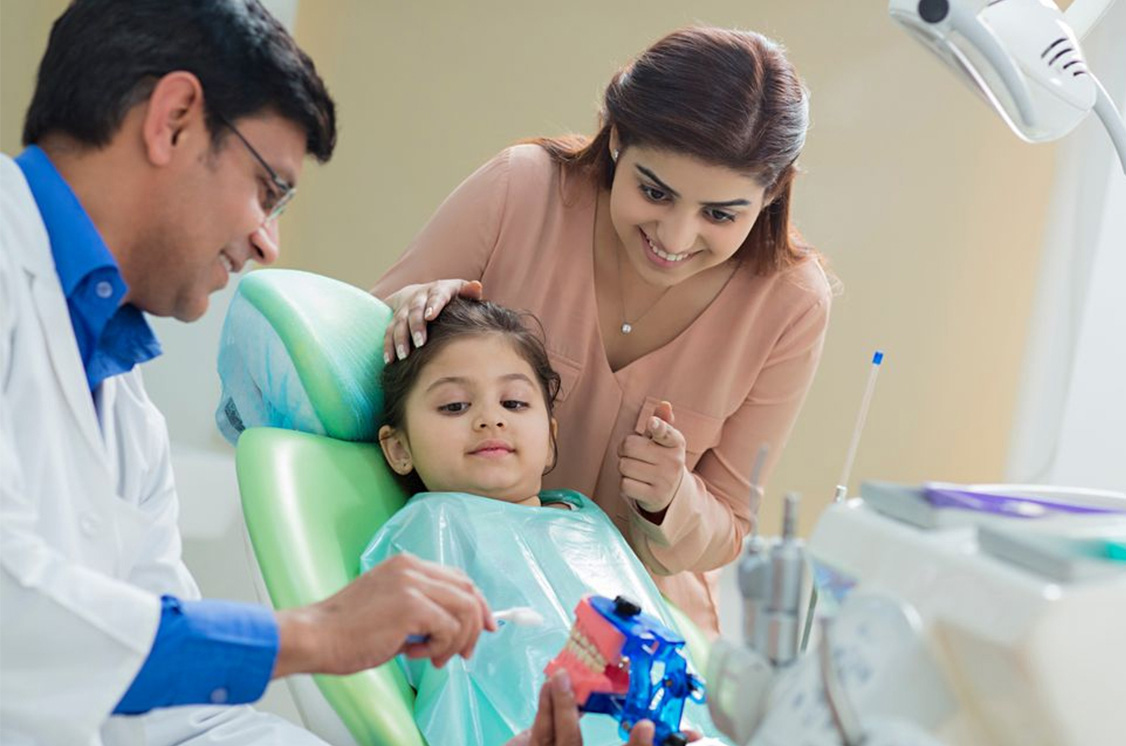
Comprehensive Treatment Options Available²⁻⁴
1. Vital pulp therapy
a. Indirect pulp capping
| Stage / Concept | Details |
|---|---|
| Rationale |
|
| Indications |
|
| Procedure |
|
b. Direct pulp capping
| Stage / Concept | Details |
|---|---|
| Rationale |
|
| Indications |
|
| Procedure |
|
2. Pulpotomy
| Stage / Concept | Details |
|---|---|
| Rationale | To remove irreversibly inflamed coronal pulp, leaving behind a healthy radicular pulp |
| Indications |
|
| Procedure |
|
3. Desensitising pulp therapy
| Stage / Concept | Details |
|---|---|
| Rationale | To reduce pulp inflammation and symptoms to enable pulpotomy or pulpectomy. |
| Indications |
|
| Procedure |
|
4. Pulpectomy
| Stage / Concept | Details |
|---|---|
| Rationale |
|
| Indications |
|
| Procedure |
|
Reduce incidence of caries and get your youngest patients excited about brushing.
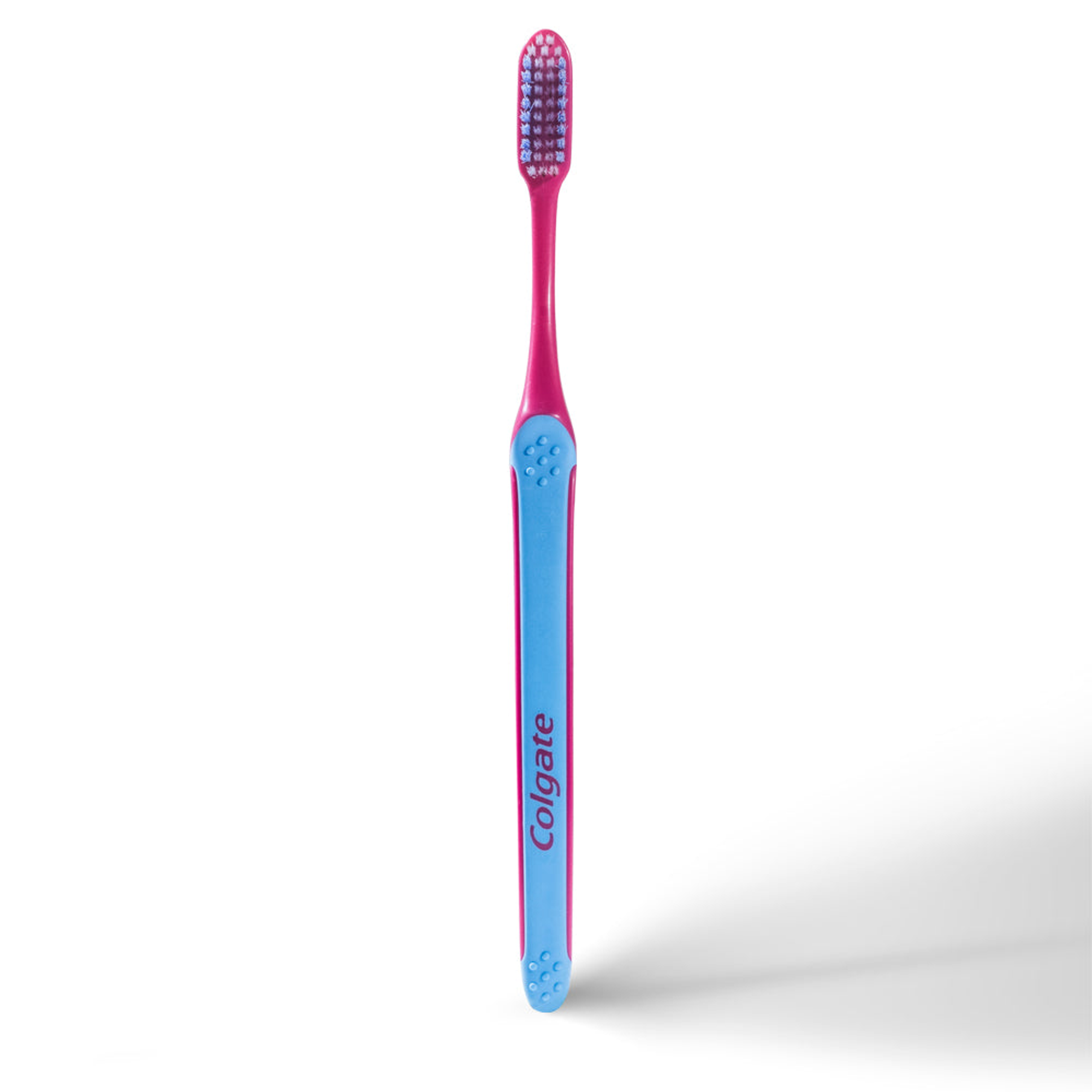
Presenting Colgate Kids Electric Toothbrush Range
Our electric toothbrush range:
- Has smaller heads that clean every corner
- Is lightweight, making it easy to hold
- Comes with extra soft bristles that are gentle on teeth
- Available in exciting Batman and fun Barbie variants
References:
1. Sanusi, S. Y., & Al-Bataynehb, O. B. (2023). Pulp Therapy of Primary Dentition; its Relevance despite Insufficient Histological Evidence: A Review. Iranian endodontic journal, 18(1), 15–40. https://doi.org/10.22037/iej.v18i1.34931
2. H. D. RODD, P. J. WATERHOUSE, A. B. FUKS, S. A. FAYLE & M. A. MOFFAT. (2006). Pulp therapy for primary molars. International Journal of Paediatric Dentistry, (Suppl. 1): 15–23. https://www.rcseng.ac.uk/-/media/files/rcs/fds/publications/pulptherapy.pdf
3. American Academy of Pediatric Dentistry. Pulp therapy for primary and immature permanent teeth. The Reference Manual of Pediatric Dentistry. Chicago, Ill.: American Academy of Pediatric Dentistry; 2023:457-65. https://www.aapd.org/media/Policies_Guidelines/BP_PulpTherapy.pdf
—---------------------------------------------------------—---------

Join us
Get resources, products and helpful information to give your patients a healthier future.
Join us
Get resources, products and helpful information to give your patients a healthier future.
