
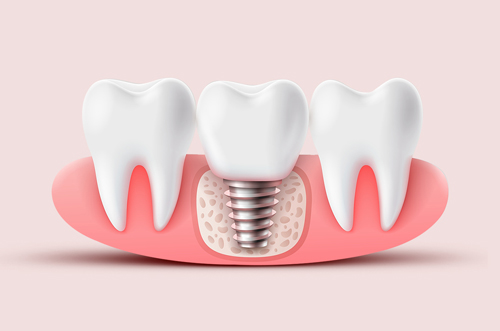
Causes Affecting Implant Health¹
| Type | Factors |
|---|---|
| Implant-related |
|
| Mechanical Factors |
|
| Patient local factors |
|
| Patient systemic factors |
|
Early Implant Failure²
It means the implant is showing clinical mobility before the final prosthesis is placed. This occurs when osseointegration fails to occur.
Causes of Early Implant Failure
- Infection
- Poor bone quality
- Insufficient bone quantity
- Chronic systemic diseases such as uncontrolled diabetes mellitus, AIDS,
- Conditions affecting bone (such as osteoporosis)
- Medications such as corticosteroids and bisphosphonates
- Smoking
- Lack of primary stability
- Surgical trauma
Later Implant Failure
These failures occur after functional loading or prosthesis placement or removal of the provisional restoration in case of immediate loading. 2 Late implant failures usually occur 1 to 3 years after implant placement. Various biological and mechanical factors can cause late implant failure.
Causes of Late Implant Failure 3
- Excessive loading
- Peri-implantitis
- Bruxism
- Retained subgingival dental cement
- Inadequate prosthesis fabrication
- Traumatic occlusion
How to Manage Implant Failure
The management of implant failure begins with identifying and eliminating the underlying cause. 4
- Evaluate the status of the implant. Check for mobility, oedema, pus, discomfort, and bleeding.
- Confirm peri-implant bone loss with a radiograph.
- If there is evident mobility, remove the implant immediately. This prevents further alveolar bone loss.
The first step in the management of a failed dental implant is its removal. However, if the implant is in the ‘ailing’, or ‘failing’ stages, we use the Cumulative Interceptive Supportive Theory or CIST protocol.
| Parameter | Clinical Evaluation | Treatment |
|---|---|---|
| PD ≤ 3 mm |
| Mechanical debridement + scaling + polishing + antiseptic cleansing using 0.1% CHX mouthwash + systemic antimicrobials |
| PD 4 to 5 mm |
| Mechanical cleansing and polishing, microbiological test, local and systemic antibiotic therapy |
| PD > 5 mm |
| Resective or regenerative surgery |
PD= Pocket Depth
Resective or regenerative surgery usually requires bone grafting of guided tissue regeneration (GTR).
Preventing Implant Failure
- Appropriate case selection: Ensure there is sufficient bone quantity and quality.
- Choose standardized materials
- Avoid smoking and tobacco before and after the implant placement procedure
- Regular follow-up appointments
- Enforce proper oral hygiene practices, including brushing and rinsing with antibacterial mouthwash.
- If high or uncontrolled blood sugar levels are the cause of implant failure, bringing them under control is essential before reattempting implant placement.
- In case of bone conditions like osteoporosis, supplementing bone using grafts may be required before implant placement.
- Avoid overloading implants in case of insufficient bone volume.
- Re-evaluate medications the patient takes and look for alternatives that do not interfere with implant osseointegration.
One of the most common causes of implant failure is infection.2 Don’t let poor oral hygiene affect the success of your implant treatment.
Reinforce your patient’s oral care routine
Presenting Colgate PerioGard Regimen
Our proven solution for comprehensive gum care, PerioGard Range, comprises-
- PerioGard Mouthwash
With a unique low-staining formula, it shows a significant reduction in plaque accumulation and gingivitis over 8 weeks.
- PerioGard Toothpaste
It contains 2% zinc citrate and fluoride, which reduce plaque severity index scores by 70%!
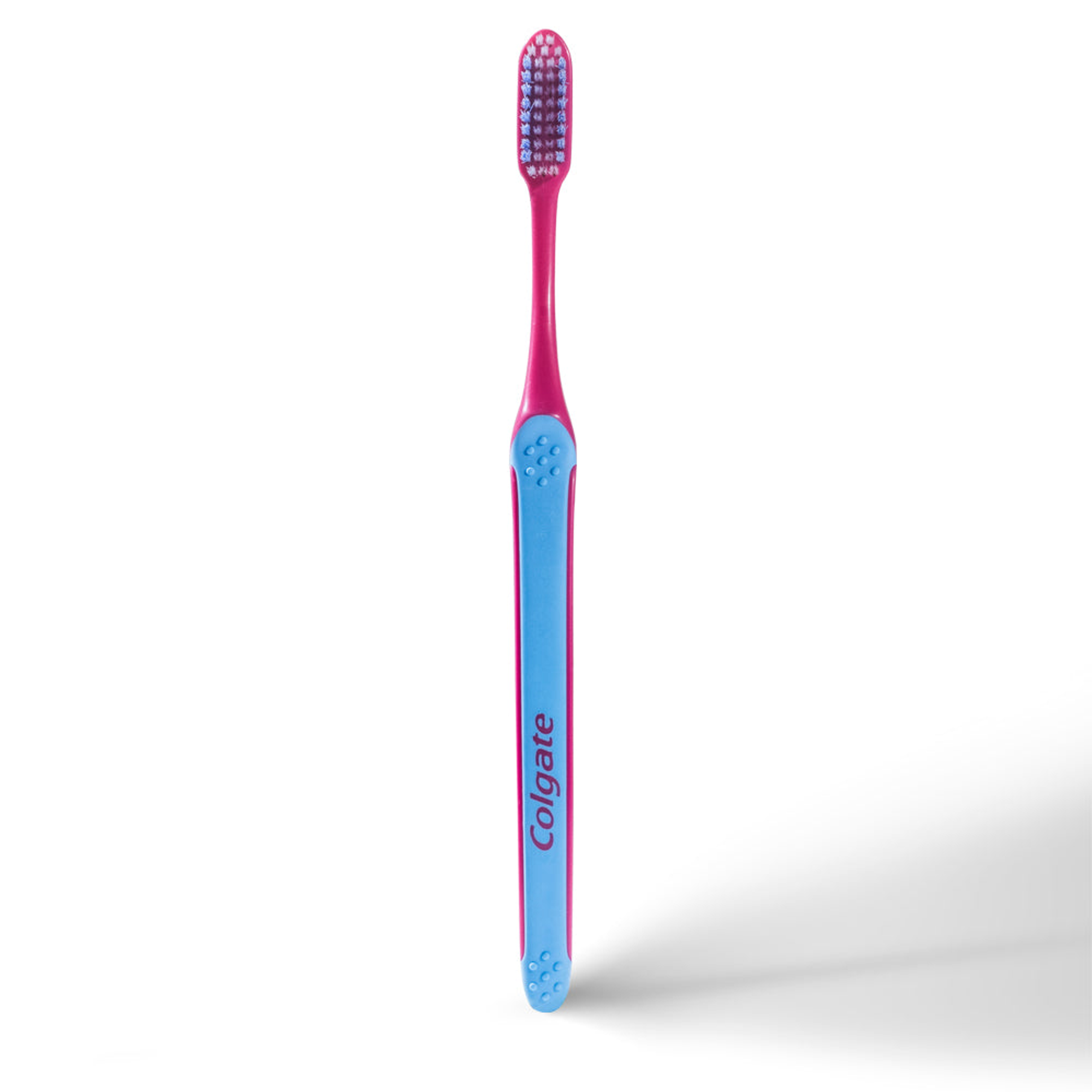
- PerioGard Gum Expert Toothbrush
With 6000+ tapered bristles, this toothbrush is designed to remove plaque gently and offer 6X better interdental reach, reducing your patient’s gum problems from the 1st week of usage.
For enhanced interdental cleaning and gum health.
Presenting Colgate Water Flosser
Colgate Water Flosser is designed to effectively remove plaque interdentally and along the gum line.
- Penetrates areas where the toothbrush cannot reach
- It has three adjustable pressure modes to suit your individual preferences
- Compact and easy-to-carry device
- Ideal for individuals with braces, implants, crowns, and bridges
References:
- Passi, D., Dutta, S., Singh, P., Atri, M., Mohan, S., & Sharma, A. (2020). Risks and complications associated with dental implant failure: Critical update. National Journal of Maxillofacial Surgery, 11(1), 14. https://doi.org/10.4103/njms.njms_75_16
- Do, T. A., Le, H. S., Shen, Y., Huang, H., & Fuh, L. (2020). Risk factors related to late failure of dental implant—A systematic review of recent studies. International Journal of Environmental Research and Public Health, 17(11), 3931. https://doi.org/10.3390/ijerph17113931
- Kochar, S. P., Reche, A., & Paul, P. (2022). The etiology and management of dental implant failure: A review. Cureus. https://doi.org/10.7759/cureus.30455
- Tanishka Taori, Bhairavi Kale, Khushboo Durge, Peri-Implantitis-An Overview, J Res Med Dent Sci, 2022, 10 (9): 153-159
- Sato, J & Gomi, Kazuhiro & Makino, T & Kawasaki, F & Yashima, Akihiro & Ozawa, T & Maeda, N & Arai, Takashi. (2011). The evaluation of bacterial flora in progress of peri-implant disease. Australian dental journal. 56. 201-6. 10.1111/j.1834-7819.2011.01324.x.

Join us
Get resources, products and helpful information to give your patients a healthier future.
Join us
Get resources, products and helpful information to give your patients a healthier future.
